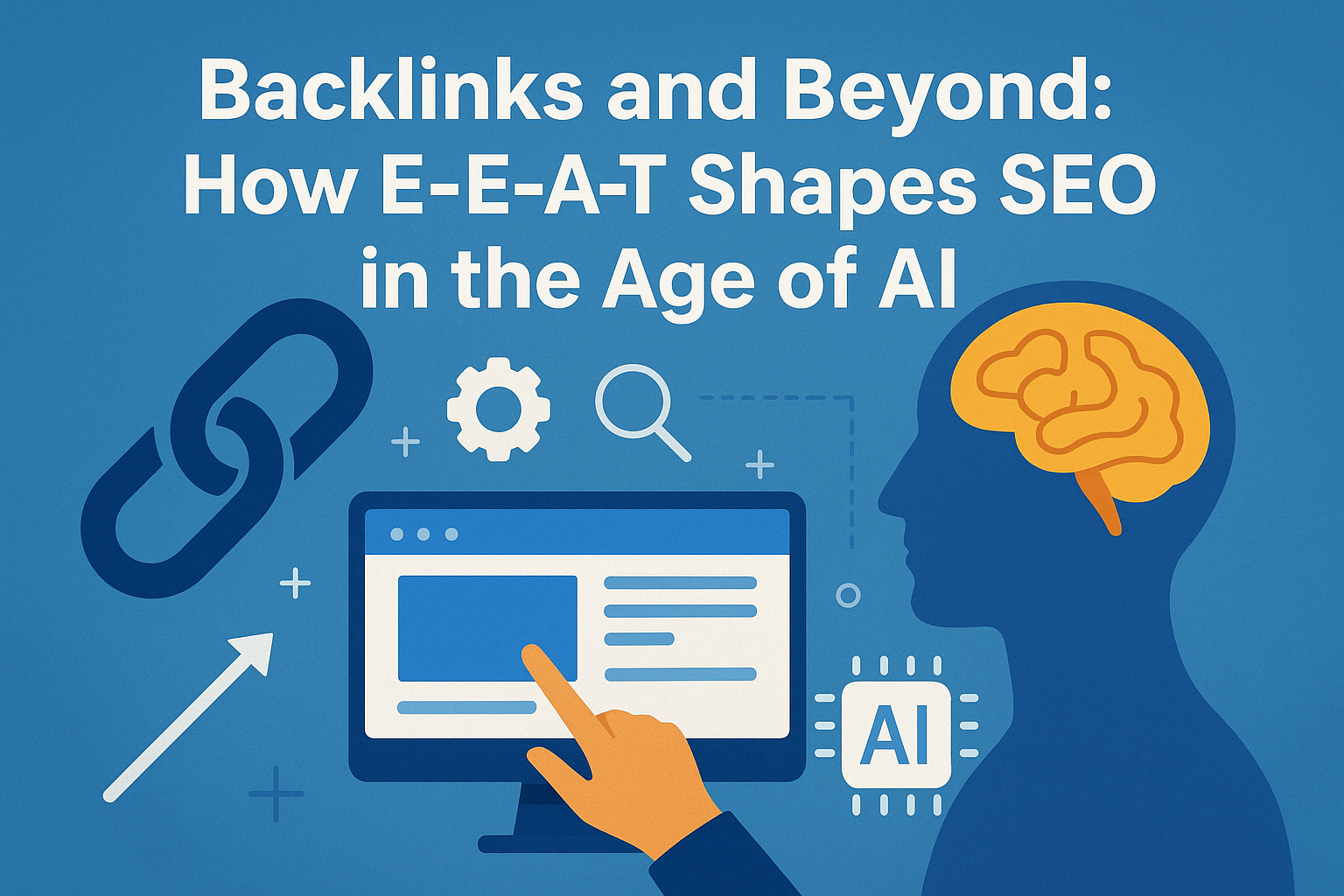
Search engines are changing fast. AI tools like ChatGPT, Perplexity, and Google’s new features are reshaping how people find answers online. At the same time, Google is doubling down on E-E-A-T—Experience, Expertise, Authoritativeness, and Trustworthiness.
Backlinks have always been a big part of SEO. They still matter in 2025, but they now work best when combined with strong E-E-A-T signals. In this post, we’ll see how backlinks fit into today’s SEO and why E-E-A-T is the real game-changer.
The Traditional Role of Backlinks in SEO
Backlinks are like votes of confidence. When another site links to you, it tells Google, “This page is worth checking out.”
For years, backlinks were the main way to climb rankings. High-quality links brought traffic, faster indexing, and higher authority. But things have changed.
Quantity is no longer enough. A pile of random backlinks won’t push you up in search results anymore. Google now looks for relevance and quality. Spammy or fake backlinks? They can hurt you more than help.
Understanding E-E-A-T and Why It Matters in 2025
E-E-A-T is Google’s way of judging content quality. Let’s break it down:
- Experience: Do you show real-life knowledge or firsthand use?
- Expertise: Do you understand your topic deeply?
- Authoritativeness: Do people within your niche recognize you as an authority?
- Trustworthiness: Can people rely on your content and website?
Unlike keywords and links, E-E-A-T does not act as a direct ranking factor. But it shapes how search engines and AI tools judge your credibility. This is even more important for sensitive topics like health, finance, or law—what Google calls YMYL (Your Money or Your Life).
How Backlinks Contribute to E-E-A-T
Backlinks and E-E-A-T work together. A link from a trusted site improves your authority. It also shows you are reliable, boosting trustworthiness.
It’s not about chasing the maximum number of backlinks. The focus should be fewer but stronger links. A single link from a respected source in your industry beats dozens from weak sites.
As AI-driven search engines decide which pages to summarize or cite, they look at both backlinks and E-E-A-T signals. Together, they show that your content deserves to be highlighted.
The Debate: Will AI Reduce the Importance of Backlinks?
Some say backlinks will always matter. They’re seen as proof from others that your content has value. AI models may still rely on this kind of validation to decide who to trust.
Others argue that AI is shifting the game. Instead of only counting links, AI engines may give more weight to semantic relevance, user engagement, and expertise shown in the content itself.
Both views have truth. Backlinks won’t disappear, but they’re no longer the whole story. In reality, backlinks now sit inside a bigger ecosystem powered by E-E-A-T.
Practical Strategies for Blending Backlinks and E-E-A-T
Here’s how to make backlinks work for you in today’s SEO:
- Create content worth linking to. Guides, case studies, and insights attract natural backlinks.
- Show your expertise. Add author bios, credentials, and real experiences.
- Use ethical link-building. Guest posts, press mentions, and collaborations are safer than shortcuts.
- Protect trust signals. Use HTTPS, clear privacy policies, and user-friendly site design.
- Clean up your links. Audit backlinks often and remove spammy ones.
When backlinks and E-E-A-T come together, your site builds lasting credibility.
Case Studies and Industry Insights
Many brands are already blending both strategies. For example:
- A healthcare site grew trust by showing expert author profiles while earning links from medical journals.
- A finance blog ranked higher after combining in-depth case studies with backlinks from major business publications.
Industry studies show the same trend. Sites with high E-E-A-T scores and authoritative backlinks consistently win better visibility in both Google and AI-powered search.
Conclusion
Even in 2025, backlinks matter, though they aren’t the only thing that counts. They now work as part of a bigger system built around E-E-A-T.
The future of SEO belongs to those who combine strong link profiles with real expertise, trustworthy content, and clear authority. AI search engines want content they can trust—and that means you need both backlinks and E-E-A-T to stay ahead.
Frequently Asked Questions (FAQ)
1. Do backlinks still matter in SEO in 2025?
Yes, backlinks still matter, but how they impact SEO has evolved. Instead of focusing on quantity, search engines now prioritize quality, relevance, and trustworthiness. One high-quality backlink from a trusted site outweighs dozens of weak links.
2. What is E-E-A-T in SEO?
E-E-A-T stands for Experience, Expertise, Authoritativeness, and Trustworthiness. It’s Google’s way of evaluating whether your content is credible and reliable, especially for sensitive topics like health, finance, and law (YMYL content).
3. Are backlinks more important than E-E-A-T?
Not exactly. Backlinks and E-E-A-T work together. Backlinks help show authority and trust, but without strong E-E-A-T signals (like expertise, author bios, and trustworthy site design), backlinks alone won’t guarantee higher rankings.
4. Could AI tools eventually replace backlinks in SEO?
AI is changing search, but backlinks won’t disappear. AI may put more weight on semantic relevance, engagement, and expertise, but backlinks will continue to act as proof that others trust your content.
5. How can I combine backlinks and E-E-A-T effectively?
You can:
- Create high-quality, link-worthy content (guides, case studies, insights).
- Showcase expertise with author bios and credentials.
- Use ethical link-building methods like guest posting and collaborations.
- Maintain strong trust signals (HTTPS, clear privacy policy, user-friendly design).
- Regularly audit and clean up spammy backlinks.
6. Why does Google care about E-E-A-T so much?
Because users need reliable information. For example, bad advice in health or finance could harm people’s lives. E-E-A-T helps Google highlight content that is safe, accurate, and trustworthy, especially in YMYL (Your Money or Your Life) areas.
7. Where is SEO headed now that AI is shaping search?
The future belongs to those who mix strong backlinks with trusted authority and proven knowledge. AI-driven search engines want content they can trust, so focusing only on links is no longer enough—you need a balanced strategy with E-E-A-T at the core.